
Mumbai’s New Property Card System Explained
-

- May 7, 2026
- 35 Comments
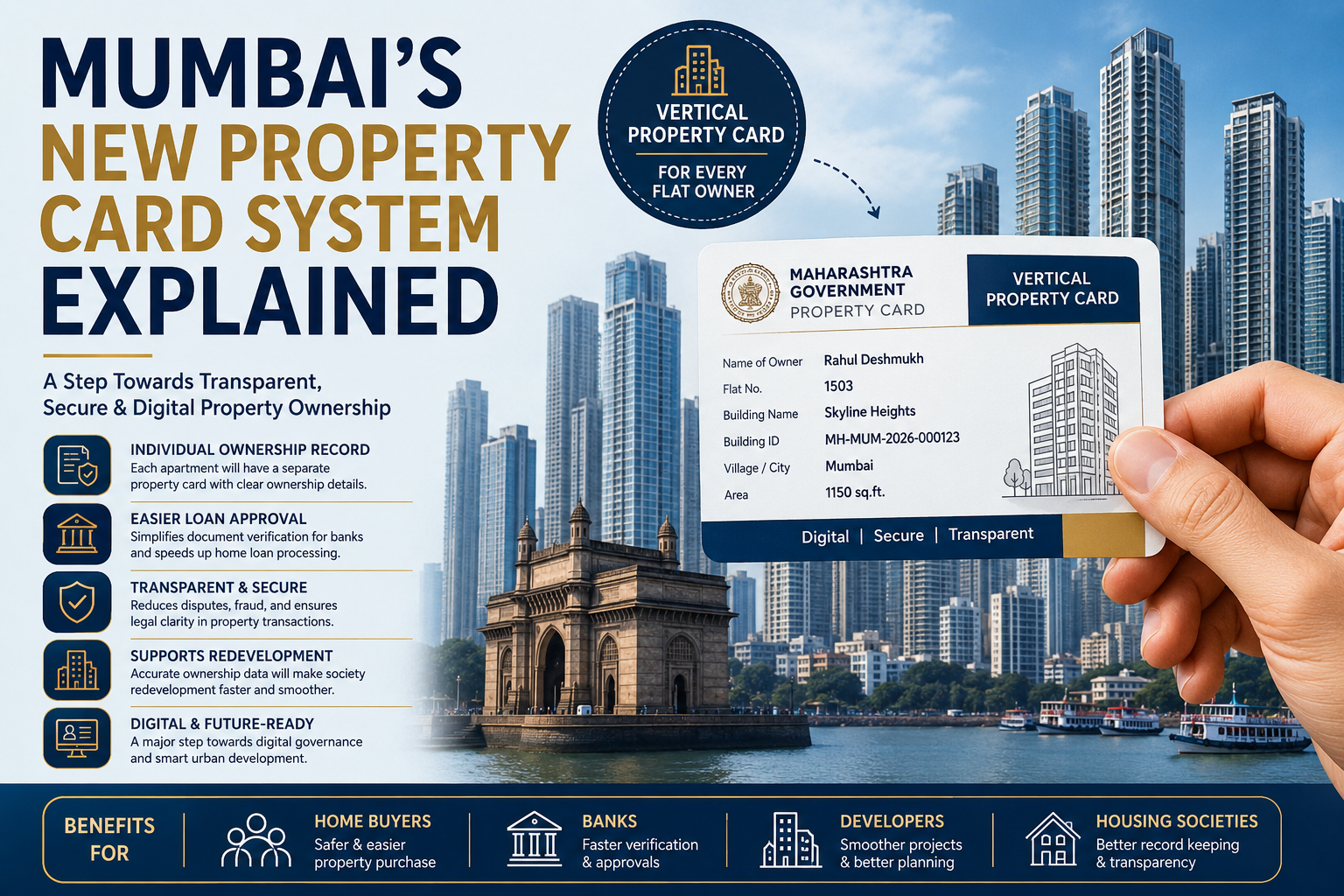
The Maharashtra government is preparing to introduce a new “Vertical Property Card” system for apartment owners in Mumbai and other urban areas across the state. This new initiative is expected to modernize property ownership records, improve transparency, and simplify legal verification for flat owners. As cities continue to grow vertically with high-rise residential towers and apartment complexes, the traditional property record system is no longer sufficient to manage ownership details efficiently. The new property card system aims to solve this issue by creating individual digital ownership records for each flat in a building.
“Modern cities need modern property systems to ensure transparency and secure ownership.”
Currently, property ownership records in many urban areas are linked mainly to land parcels rather than individual apartments. This often creates complications during property sales, home loan approvals, redevelopment projects, inheritance transfers, and legal disputes. Under the proposed vertical property card system, every apartment owner will receive a separate property card that clearly defines ownership rights for a specific unit within a building. This will help reduce confusion and make property transactions smoother and more transparent.
The new system is especially important for a densely populated city like Mumbai, where vertical living has become the norm. Thousands of residential towers and mixed-use developments are being constructed every year, and maintaining accurate ownership records has become increasingly complex. The vertical property card system is expected to bring better organization and accountability to urban real estate management.
“Clear ownership records create stronger confidence for buyers, banks, and investors.”
One of the biggest advantages of the new property card system is that it can simplify the home loan process. Banks and financial institutions often face difficulties while verifying apartment ownership documents, especially in older societies or redeveloped buildings. With digital property cards assigned to individual flats, loan verification and property valuation processes could become much faster and more reliable. This would benefit both homebuyers and lenders.
The system is also expected to improve legal transparency in real estate transactions. Buyers will be able to verify ownership details more easily before purchasing a property. This can reduce the risk of fraud, duplicate sales, ownership disputes, or incomplete documentation. In a market where legal clarity is extremely important, the new property card initiative could become a major step toward safer property transactions.
Another key benefit is better support for redevelopment projects. Many housing societies in Mumbai are undergoing redevelopment due to aging infrastructure and increasing demand for modern housing. During redevelopment, disputes related to ownership rights, carpet area allocation, and member verification are common. The new system can help authorities and developers maintain accurate records of each apartment owner, making redevelopment processes more efficient.
“Digital property records are becoming the foundation of future urban development.”
The Maharashtra government is also focusing on digitization and smart governance in urban infrastructure. The proposed property card system aligns with broader digital transformation initiatives that aim to improve land records, reduce paperwork, and increase efficiency in public services. By integrating apartment ownership data into a structured digital format, authorities can create a more reliable and accessible property management system for the future.
Real estate experts believe the new property card system could positively impact buyer confidence and improve the overall transparency of the housing market. It may also help attract more institutional investment into urban real estate because organized property documentation reduces legal and operational risks. Developers, banks, housing societies, and homebuyers are all expected to benefit from this modernization initiative.
However, implementing the system across existing residential societies and older buildings may take time. Authorities will need to conduct detailed property mapping, ownership verification, and data integration processes to ensure accurate records. Public awareness and cooperation from housing societies will also play an important role in successful implementation.
.Overall, Mumbai’s new property card system represents a significant step toward modernizing urban real estate management. As the city continues to expand vertically, creating transparent and legally secure ownership records has become essential. If implemented effectively, the initiative could make property transactions safer, improve redevelopment efficiency, simplify loan approvals, and strengthen trust in the real estate sector.
“The future of real estate lies in transparency, digital records, and secure ownership systems.”
Related Post

Why Luxury Housing is Booming in India in 2026
The Indian real estate market is witnessing a major transformation in 2026

Real Estate Market Forecast for 2026
The Indian real estate market is expected to witness strong and steady growth in 2026
Looking for a dream home?
We can help you realize your dream of a new home