
Real Estate Market Forecast for 2026
-

- May 7, 2026
- 35 Comments
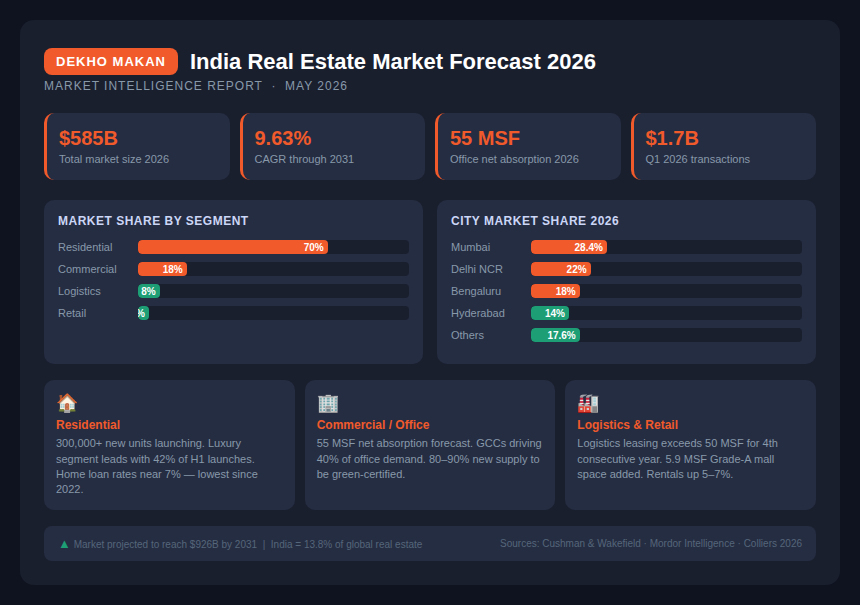
The Indian real estate market is expected to witness strong and steady growth in 2026, driven by rising urbanization, infrastructure development, increasing housing demand, and strong investor confidence. From luxury housing and commercial properties to affordable housing and smart developments, the sector is entering a new phase of expansion. Cities like Mumbai, Bangalore, Pune, Hyderabad, and Delhi are expected to remain key growth centers for residential and commercial real estate in the coming year.
“2026 is expected to be a defining year for India’s real estate transformation.”
One of the biggest factors driving the market is the growing demand for premium and luxury housing. Homebuyers today are focusing more on lifestyle, spacious homes, smart technology, and wellness amenities. Luxury apartments, gated communities, and branded residences are witnessing strong demand among high-income professionals, NRIs, and investors. Developers are increasingly launching premium projects with world-class amenities, modern architecture, and smart home features to meet changing buyer preferences.
At the same time, affordable and mid-segment housing will continue to play a major role in India’s real estate growth. Government initiatives, improved loan accessibility, and increasing urban migration are supporting demand for budget-friendly homes. Tier-2 and Tier-3 cities are also becoming attractive investment destinations due to lower property prices, improving infrastructure, and growing employment opportunities.
“The future of Indian real estate lies in both affordability and aspirational living.”
Commercial real estate is also expected to remain strong in 2026, especially in IT and business hubs. Demand for Grade-A office spaces, coworking centers, and mixed-use developments is likely to increase as businesses continue expanding operations. Cities such as Bangalore and Hyderabad are projected to lead office space absorption due to strong technology and startup ecosystems.
Infrastructure development will be one of the biggest growth drivers for the real estate market in 2026. Metro rail expansions, coastal roads, expressways, smart city projects, airport connectivity, and redevelopment initiatives are expected to boost property demand and appreciation in multiple regions. Locations near major infrastructure projects often witness rapid growth in property value and investment activity.
Technology is another important trend shaping the future of real estate. Developers are increasingly adopting AI-powered systems, virtual property tours, digital documentation, CRM automation, and smart home technologies to improve customer experience and operational efficiency. Buyers are also becoming more comfortable with online property research and digital transactions.
“Technology is redefining the way people buy, sell, and experience real estate.”
The Maharashtra government is also focusing on digitization and smart governance in urban infrastructure. The proposed property card system aligns with broader digital transformation initiatives that aim to improve land records, reduce paperwork, and increase efficiency in public services. By integrating apartment ownership data into a structured digital format, authorities can create a more reliable and accessible property management system for the future.
Sustainability and green development are expected to become more important in 2026. Homebuyers are showing increasing interest in eco-friendly projects that include energy-efficient systems, rainwater harvesting, solar solutions, and green open spaces. Developers focusing on sustainable construction and environmentally conscious designs may gain a competitive advantage in the evolving market.
The luxury housing segment is forecasted to outperform many other categories due to rising disposable income and strong investor interest. NRIs are also expected to contribute significantly to premium property demand because of favorable exchange rates and long-term investment opportunities in India. High-end sea-facing apartments, smart villas, and branded residences will remain highly attractive in metro cities.
.However, the market may also face certain challenges such as rising construction costs, land prices, regulatory compliance, and global economic uncertainty. Interest rate movements and inflation could influence buyer sentiment in some segments. Despite these challenges, overall market fundamentals remain positive due to strong urban growth and long-term housing demand.
“Real estate continues to remain one of India’s most trusted long-term investment sectors.”
Experts believe 2026 could become a milestone year for Indian real estate as the sector evolves toward smarter, more transparent, and technology-driven growth. Residential demand, commercial expansion, infrastructure upgrades, and digital transformation are expected to create strong opportunities for developers, investors, and homebuyers alike.
Overall, the real estate market forecast for 2026 remains highly optimistic. Whether it is luxury housing, commercial spaces, affordable homes, or emerging smart cities, India’s property market is expected to continue expanding and attracting investment from both domestic and international buyers.
Related Post
Mumbai’s New Property Card System Explained
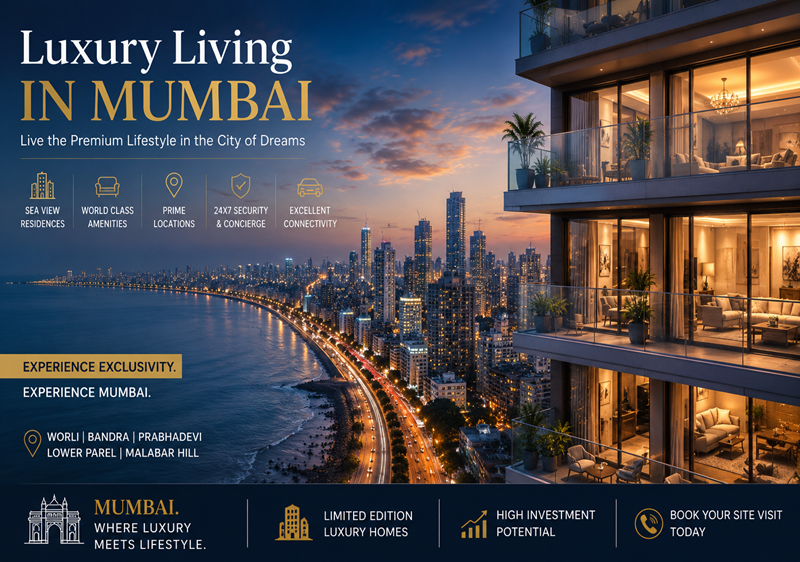
The Maharashtra government is preparing to introduce a new “Vertical Property Card”
Why Luxury Housing is Booming in India in 2026
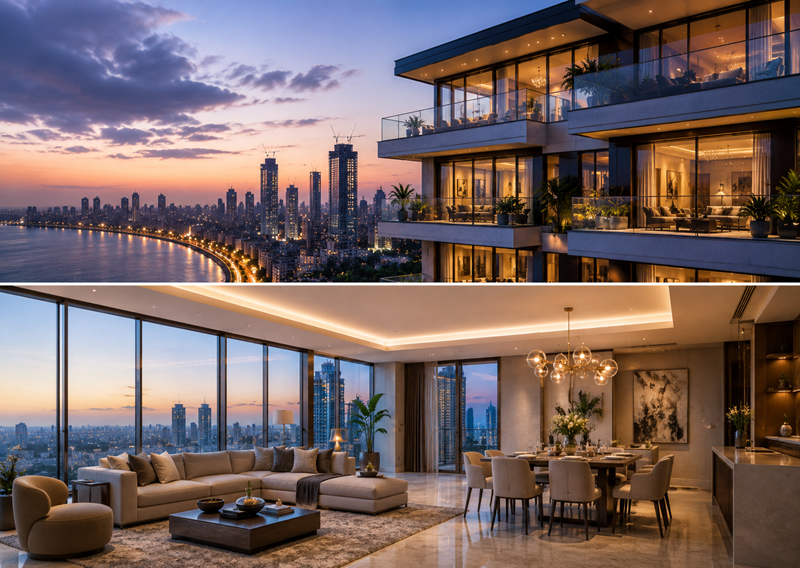
The Indian real estate market is witnessing a major transformation in 2026, with luxury
Looking for a dream home?
We can help you realize your dream of a new home